
Italian Culture, Italian Language
Solleone, Granita & Passeggiata: An Italian Summer in 8 Words
Jun
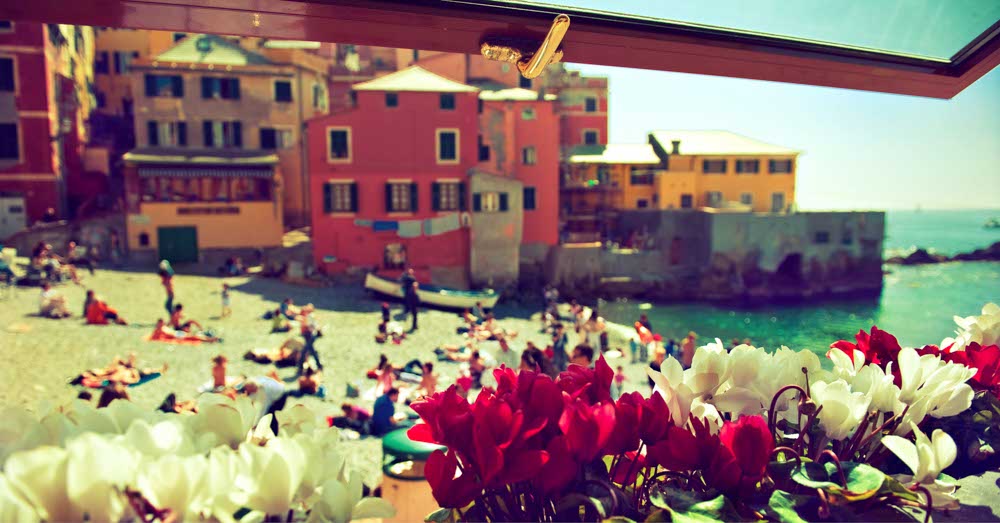
When June arrives, Italy transforms. Schools close until mid-September, beaches start filling with people and colourful ombrelloni – the big umbrellas that protect from the increasingly strong sun.
As soon as July starts, cities become emptier and emptier as families head to the coast or the countryside for their villeggiatura – the annual summer escape that has defined Italian life for centuries.
By mid-July, the solleone takes hold: the fierce, unrelenting sun that sends everyone searching for shade. The afa – that thick, humid heat – settles over Rome, Milan, and Naples like a blanket. Air conditioning is still a luxury in some older buildings, but the thickness of their walls provides a good shelter from the heat.
Essentially, Italians have perfected the art of living around the heat rather than fighting it.
Mornings start early. Markets open at dawn, and errands are done before 10am. Then comes the long pause – shops close, shutters drop, and the country rests until late afternoon. This isn’t laziness; it’s centuries of wisdom about surviving 40-degree days.
As evening falls, the passeggiata begins. Families, couples, and friends stroll through town centres, stopping for gelato or a cold drink at a bar. The air finally cools a little bit.
At the beach, life revolves around the stabilimento balneare (also called bagno or lido, depending on what part of Italy you are spending your summer). It is an organised beach space with its rows of ombrelloni and lettini.
There is usually a bar, a restaurant, and long rows of beach huts for changing. And of course, a space with tables and sometimes even a stove where family and friends can eat their meal together.
Italians usually rent the same spot year after year, building summer friendships that last generations.
Another important thing characterising the Italian summer is the pursuit of the perfect tintarella, which is a serious business, with carefully scheduled oiling and turning.
Then in August, Ferragosto time arrives, and it is when most factories and businesses are closed in Italy, especially around August 15 – the pinnacle of summer.
Cities are often similar to ghost towns as the entire nation celebrates with beach barbecues, fireworks over the sea, and enormous family lunches that stretch into the evening. It marks both the Assumption of Mary and the ancient Roman festival of rest.
To cool down, there’s granita – especially in Sicily, where the icy, intensely flavoured treat is eaten for breakfast with a warm brioche. Lemon, almond, coffee, mulberry – each town claims the best recipe.
In conclusion, the Italian summer isn’t just a season. It’s a philosophy: slow down, gather together, eat well, and let the heat teach you patience.
Italian Summer Essential Vocabulary
- Solleone
the intense midsummer sun (mid-July to mid-August) - Tintarella
Sun tan – the art of bronzing under the Italian sun - Ferragosto
August 15 national holiday – peak of summer celebrations - Passeggiata
the traditional evening stroll through town - Granita
Icy fruit dessert – Sicily’s answer to the heat, which became popular all over Italy and beyond its borders - Villeggiatura
Summer holiday escape to the countryside or coast - Afa
the heavy, humid heat that settles over Italian cities - Ombrellone
the large beach umbrella – a symbol of Italian summers
Interested in learning to speak Italian?
We offer Italian Language Classes from beginners to advanced. To find out more, visit our Italian Classes page or submit an enquiry and our Education Officers will be in touch.