Italian Language
One language, many voices: Italian and the power of culturally diverse dialogue
May
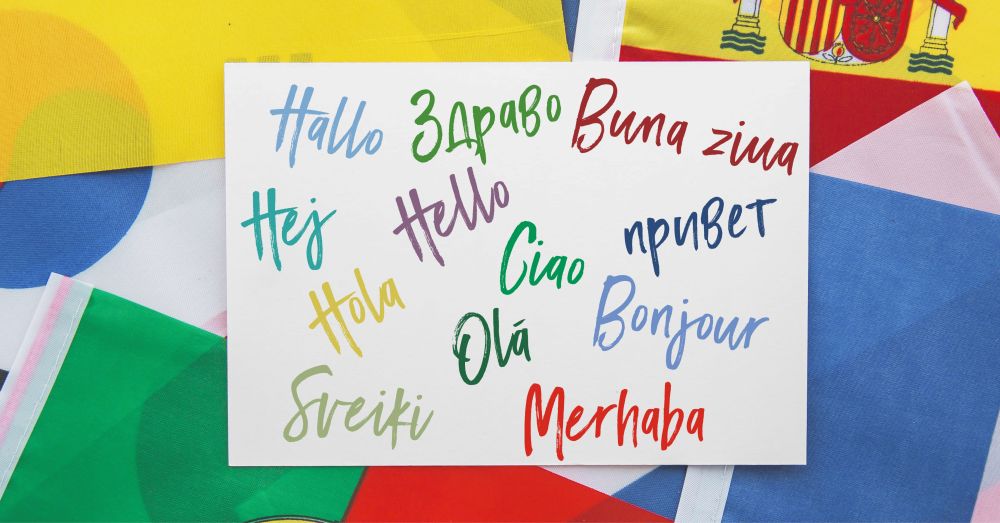
Every year on May 21, the World Day for Cultural Diversity for Dialogue and Development reminds us that dialogue turns difference into shared progress.
Language is at the heart of that dialogue, carrying history, identity and ways of thinking across borders. Valuing language diversity supports inclusion and cooperation – and Italian, with its layered past and vibrant regional variety, shows how a shared language can still hold many voices.
The Rich History of the Italian Language
Italian developed from Vulgar Latin, the everyday speech of the Roman world and diversified as communities across the peninsula shaped it to local life. In the 14th century, Dante Alighieri’s literary use of Tuscan helped establish a prestigious vernacular model that strongly influenced the emerging standard.
Italian also bears the imprint of centuries of contact – Greek, Arabic, Norman, Spanish, and French influences enriched its vocabulary, sounds and cultural references. After unification in 1861, standardisation expanded Italian in administration, schooling and media, while regional varieties remained central to daily communication.
Italy’s dialectal landscape – such as Venetian, Neapolitan and Sicilian – shows how linguistic diversity can strengthen a sense of belonging. Today, Italian is spoken by 85+ million people worldwide, linking Italy and its Diasporas through culture and everyday life.
Why Multilingualism Matters
Studying a foreign language offers cognitive benefits (e.g., stronger memory and mental flexibility) and can widen professional opportunities in globally connected fields.
More importantly, multilingualism helps people participate fully while expressing identity and nuance in the language that best carries their voice.
Wilhelm von Humboldt argued that each language embodies a distinctive worldview (Weltanschauung), shaping how speakers perceive and interpret reality.
Learning and using multiple languages, therefore, expands perspective and builds cultural empathy, making dialogue more informed and respectful.
The Common European Framework of Reference for Languages (CEFR)
The Common European Framework of Reference for Languages (CEFR) is an international standard for describing language proficiency in a clear, comparable way.
By aligning learning goals and assessment, it supports inclusive multilingual education and makes skills easier to recognise for study, work and migration across borders.
It spans six levels from A1 to C2, offering a shared reference point for progress and participation.
Language, Culture, and Global Development
Linguistic and cultural diversity fuel innovation by bringing multiple perspectives to shared challenges and multilingual collaboration helps ideas travel faster across communities and markets. It also supports economic participation by improving access to services, education and information.
These outcomes align with the UN Sustainable Development Goals – especially quality education (SDG 4), reduced inequalities (SDG 10), and peace, justice and strong institutions (SDG 16).
Valuing languages – including Italian – protects cultural heritage while strengthening mutual respect and peaceful dialogue.
Celebrate cultural diversity by learning a few new words or starting a conversation across cultures. Whether it’s Italian or another language, every step toward multilingualism is a step toward connection.
References
Council of Europe. (2020). Common European Framework of Reference for Languages: Learning, teaching, assessment-Companion volume. Council of Europe Publishing.
UNESCO. (2001). Universal Declaration on Cultural Diversity. UNESCO.
UNESCO. (2005). Convention on the Protection and Promotion of the Diversity of Cultural Expressions. UNESCO.
Cummins, J. (2000). Language, power and pedagogy: Bilingual children in the crossfire. Multilingual Matters.
Humboldt, W. von. (1999). On language: On the diversity of human language construction and its influence on the mental development of the human species (P. Heath, Trans.; M. Losonsky, Ed.). Cambridge University Press. (Original work published 1836)
García, O., & Wei, L. (2014). Translanguaging: Language, bilingualism and education. Palgrave Macmillan.
De Mauro, T. (2014). Storia linguistica dell’Italia unita (2nd ed.). Laterza.