
Italian Culture
The Sweet Story of Panettone: Italy’s Iconic Christmas Bread
Dec
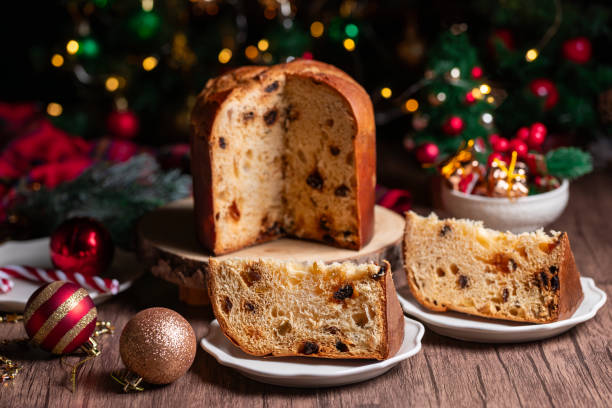
Panettone, the tall, dome-shaped sweet bread that graces Italian tables every Christmas, is more than just a festive dessert. It is a symbol of Milanese tradition, a product of centuries of culinary evolution, and a story woven with legend, language, and love. Its rich aroma of butter, candied fruit, and raisins evokes the warmth of Italian holiday gatherings, while its history reveals a fascinating blend of myth and fact.
Etymology
According to the prestigious Dictionary of The Italian language “Treccani” word panettone derives from panattón used in Milanese dialect and related to the word pane – bread.
The augmentative suffix, one transforms it into “large bread.” This linguistic evolution mirrors the bread’s transformation from a humble loaf into a grand, celebratory centrepiece. Some scholars also trace its roots to the Milanese dialect, where pan del ton could mean “luxury bread” or “bread of richness,” reflecting the use of fine ingredients like butter, eggs, and sugar – once rare and expensive.
Legends of Panettone
Several romantic legends surround the origin of panettone, each adding a touch of magic to its history.
The most popular tale The Legend of Toni, tells of a young kitchen assistant named Toni in the court of Ludovico il Moro, Duke of Milan, during the 15th century. On Christmas Eve, the cook accidentally burned the dessert prepared for the duke’s banquet. To save the feast, Toni improvised by mixing leftover flour, butter, eggs, sugar, raisins, and candied fruit into a dough. The result was a fragrant, golden loaf that delighted the guests. When asked about the creation, the cook credited “il pan de Toni” – Toni’s bread, giving rise to the name panettone.
The Real History
While the legends add charm, historical evidence points to panettone’s origins in medieval Milan. Early records from the 13th century mention pan de sciori (bread of the lords), a rich bread eaten during Christmas celebrations. By the 15th century, documents describe a custom in Milan where families would share a large, sweetened loaf on Christmas Day, blessed by the head of the household.
The modern version of panettone began to take shape in the early 20th century. Milanese baker Angelo Motta revolutionized its production by introducing a tall, domed shape achieved through a long, natural leavening process. His innovation gave panettone its signature airy texture and towering form. Soon after, another baker, Gioacchino Alemagna, refined the recipe and expanded its commercial reach, turning panettone into a national and eventually international symbol of Italian Christmas.
Cultural Significance
Today, panettone is enjoyed not only in Italy but around the world, from Argentina to the United States and Australia where there is a strong presence of Italian communities. However, many in our days many people with no Italian background appreciate it and adds panettone to their festive menu.
In Italy each region and family adds its own twist, some fill it with chocolate, pistachio cream, or limoncello, while others preserve the classic combination of raisins and candied orange peel.
One thing is sure: there is no such thing as an Italian Christmas without panettone!