
Italian Culture
“A Carnevale ogni scherzo vale”: Shrove Tuesday and the Meaning of Carnevale
Feb
Each year, between February and March, Italy bursts into colour, masks and celebration: it is Carnevale, culminating on Shrove Tuesday (Martedì Grasso), the final day before Lent begins.
The well-known Italian saying “A Carnevale ogni scherzo vale” – literally, “At Carnival, every joke is allowed” – perfectly captures the spirit of this celebration. During Carnevale, the usual rules are relaxed, laughter takes centre stage and playful mischief becomes part of the tradition.
The Meaning of “Carnevale”
The word Carnevale most likely comes from the Latin carnem levare – “to remove meat” – referring to the start of Lent, the forty days of preparation before Easter traditionally marked by fasting and reflection. Another interpretation, carne vale (“farewell to meat”), carries the same idea: a joyful farewell to indulgence before a quieter season.
Shrove Tuesday – often called “Fat Tuesday” – is therefore a final celebration of abundance, rich food and community before the reflective period of Lent.
From Ancient Festivals to Renaissance Spectacle
The origins of Carnevale can be traced back to Roman festivals such as the Saturnalia, when social roles were temporarily reversed and public celebrations filled the streets. This temporary “world turned upside down” laid the foundations for the playful freedom expressed in the saying “A Carnevale ogni scherzo vale.”
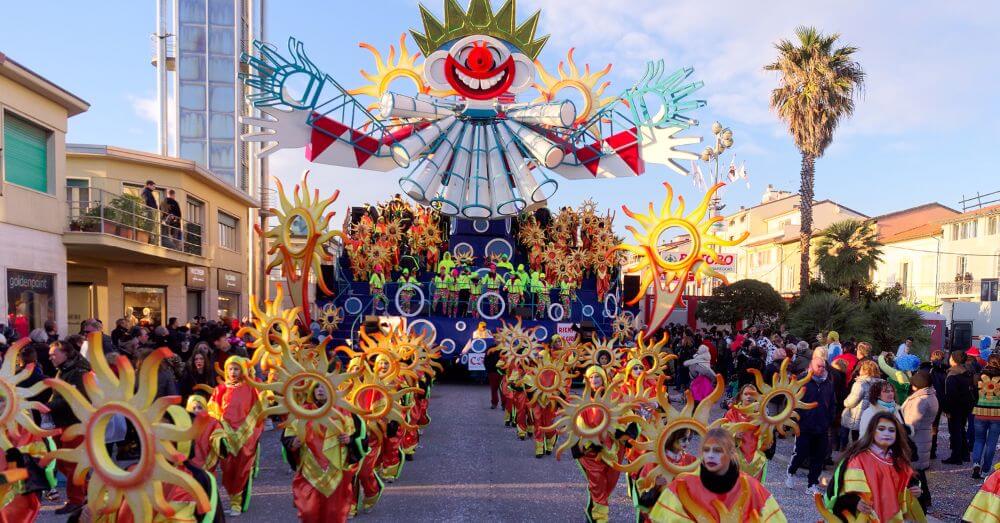
During the Middle Ages and Renaissance, Carnevale evolved into a vibrant urban festival. Among the most famous celebrations today are the elegant Carnevale di Venezia and the spectacular Carnevale di Viareggio, known for its satirical floats.
Masks and the Commedia dell’Arte
Carnevale is closely linked to the Commedia dell’Arte, the 16th-century improvised theatre tradition featuring stock characters identified by masks. Figures such as Arlecchino, Pantalone and Pulcinella brought satire and humour to the stage.
Wearing a mask symbolised freedom: identities were hidden, hierarchy softened and social criticism could be expressed more openly. In this context, the proverb “A Carnevale ogni scherzo vale” reflects not chaos, but a culturally accepted space for humour, irony and creative expression.
Carnevale vs Carnival in Australia
Although the English word carnival shares the same Latin origin, its meaning in Australia is often broader and secular. A “carnival” may refer to a school fundraiser, a swimming carnival or a community fair – not necessarily connected to Lent.
In Italy, however, Carnevale remains tied to the Christian calendar and carries deep historical and cultural significance. The playful spirit expressed in “A Carnevale ogni scherzo vale” is rooted in centuries of tradition, theatre and ritual.
Sweet Traditions
No Carnevale is complete without traditional sweets such as chiacchiere, castagnole and Venetian frittelle – fried, sugary treats symbolising abundance before the simplicity of Lent.
Carnevale is more than a party. It is theatre, history and identity – a celebration where, for a brief moment, laughter is king and every joke truly “counts.”
- Bakhtin, Mikhail (1968). Rabelais and His World. English translation, M.I.T Press, Boston
- Burke, Peter (1978). Popular Culture in Early Modern Europe, Temple Smith, London
- https://www.treccani.it/enciclopedia/carnevale/?search=carnevale%2F
- https://www.britannica.com/art/commedia-dellarte
- https://viareggio.ilcarnevale.com/
- https://www.storicocarnevaleivrea.it/it/home/
- https://carnevale.venezia.it/