
Italian Culture
Italian Traditions for Good Friday (Venerdì Santo)
Apr
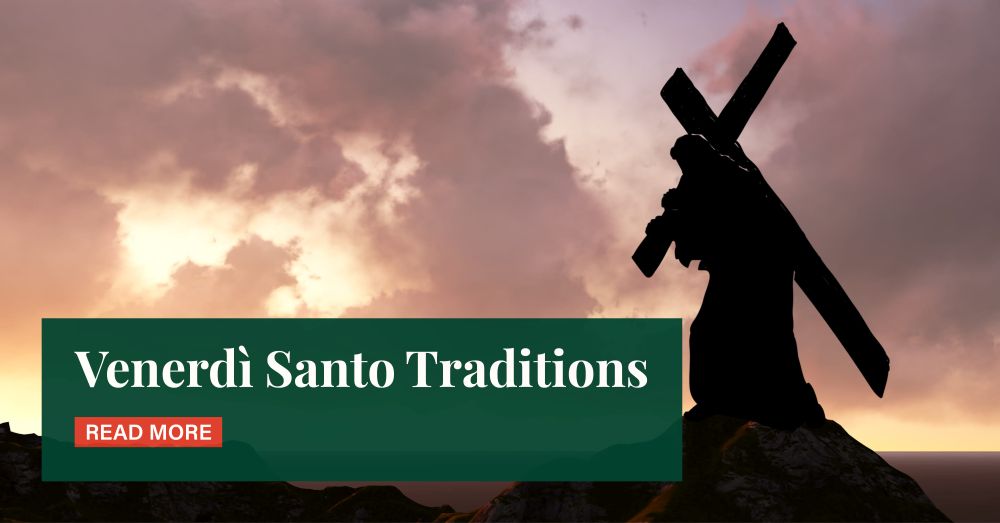
Good Friday, known in Italy as Venerdì Santo, is one of the most solemn days in the Christian calendar. It commemorates the crucifixion and death of Jesus Christ and across Italy it is observed with deep reverence, reflection, and centuries-old traditions that blend faith, art and community.
Religious Observances
Churches throughout Italy hold special liturgies on Good Friday, focusing on the Passion of Christ. The Mass of the Lord’s Passion is celebrated in the afternoon, often accompanied by readings from the Gospel and the veneration of the cross. Many Italians spend the day fasting or abstaining from meat, following Catholic tradition.
Processions and Re-enactments
One of the most striking aspects of Venerdì Santo in Italy is the series of processions that take place in towns and villages. These processions often feature statues of the Virgin Mary and Jesus carried through the streets, accompanied by candlelight, prayers and solemn hymns. Participants may dress in traditional robes and some processions re-enact the Stations of the Cross, depicting the final moments of Christ’s life.
In cities like Rome, Taranto, and Enna, these processions are particularly elaborate. In Enna, Sicily, thousands of hooded confraternity members march in silence, creating a powerful and emotional atmosphere. In Rome, the Pope leads the Via Crucis (Way of the Cross) at the Colosseum, a moving ceremony broadcast worldwide.
Culinary Traditions
Good Friday meals in Italy are simple and meat-free, reflecting the day’s penitential nature. Fish is the main dish, often prepared with vegetables or legumes. Popular dishes include baccalà (salted cod), zuppa di pesce (fish soup), and various vegetable-based soups. Bread and olive oil are staples, and desserts are minimal, as the focus remains on reflection rather than celebration.
Community and Reflection
Beyond the religious rituals, Venerdì Santo is a day of quiet contemplation. Many Italians take time to attend church, visit family, or simply reflect on the meaning of sacrifice and renewal. The atmosphere is calm and introspective, setting the tone for the joy of Easter Sunday that follows.
References
• Italian National Tourist Board (ENIT)
Official tourism site detailing Holy Week and Good Friday traditions across Italy, including processions and religious events. (Discover Italy: Official Tourism Website – Italia.it )
• BBC Travel. “Italy’s Passion Plays and Good Friday Processions”
An article exploring regional variations of Good Friday rituals, such as the famous processions in Enna and Chieti. (BBC Travel | Food & drink, History, Destinations, Road trips )
• Smithsonian Magazine. “How Italy Honors Good Friday”
A cultural overview of Italy’s Good Friday observances, focusing on historical and religious significance. (Smithsonian Magazine: Explore History, Science, Arts & Culture )
• National Geographic. “Holy Week in Italy: Faith, Tradition, and Community”
A feature on the visual and emotional aspects of Good Friday ceremonies in Italian towns. (National Geographic )
• Touring Club Italiano. “Le processioni del Venerdì Santo: un viaggio tra fede e cultura”
A journey through Italy’s most evocative Good Friday processions, such as those in Enna, Chieti, and Sorrento, blending religion, history, and cultural identity.
• Rai Cultura. “Tradizioni pasquali italiane: il Venerdì Santo”
A report describing how Good Friday is observed across Italy, featuring ancient rituals, sacred reenactments, and moments of collective reflection.
• Vatican News. “La Settimana Santa in Italia: il significato del Venerdì Santo”
This article explains the religious and symbolic importance of Good Friday, analysing the liturgical celebrations and popular traditions that accompany this solemn day.